You're already doing the work. You're just not capturing it.
Meet Gloria. She's 72, lives alone, and manages diabetes, hypertension, and depression. Her A1C is climbing, so her meds get adjusted and she's sent home. What no one had time to ask: she isn't eating regularly because she can't afford food, and she qualifies for SNAP but doesn't know how to apply.

Your clinicians see a hundred Glorias a week. Their needs go unmet not because your teams don't care, but because the system isn't built to catch them: social-risk screening gets buried in the EHR or skipped for lack of time, and navigator caseloads fill up fast, so the work doesn't scale. And what slips through doesn't disappear. It resurfaces as the readmissions, ED visits, and quality gaps you're held accountable for.
Alvee changes that without changing how your teams work. We're embedded in your EHR via SMART on FHIR, HIPAA-compliant, with no new logins and no added work for care teams. Alvee reads the clinical note, surfaces Gloria's food insecurity, and turns it into a documented, billable, actionable plan in one click.
The proof is on your peers' books. In Alvee's assessment on the Mayo Clinic Platform, across more than 400,000 outpatient visits at a single health system, we surfaced social needs that structured documentation was missing almost entirely, and identified reimbursement that was already being earned but never captured, all while giving clinical time back to the people delivering care.
More than revenue
It moves what you're already measured on
Resolving social needs isn't a side mission. Independent, peer-reviewed evidence ties it directly to the outcomes, experience scores, and safety measures health systems are accountable for.
This isn't new spend chasing a soft mission. It's revenue you're already earning but not capturing, clinician time you're already burning, and the readmissions, experience scores, and safety outcomes you're already accountable for; all moved in the right direction without changing how your teams work.
Your mission is whole-person care. Your margin can't always afford it.
Meet Marcus, the patient your health center was built for. He's 68 and dual-eligible, covered by both Medicare and Medicaid, and juggling COPD, Type 2 diabetes, and unstable housing. He shows up when things get bad, then disappears. Your team already knows his housing situation is undoing every treatment plan they write.

Here's what makes a health center different: you're paid one bundled rate per visit, no matter how complex the patient or how much coordination they need. So most of the whole-person work your team already does for Marcus (finding housing, keeping his coverage active, getting him to appointments) never shows up as revenue. With one exception, and it's a big one: Medicare pays for care coordination separately, on top of your PPS rate. And since Marcus is dual-eligible, Medicare pays first, with Medicaid as the payer of last resort, so that coordination is Medicare's to reimburse, even though he's part of your Medicaid panel too. Most clinics can't capture it, because documenting it eats the staff time they don't have, and with margins thin and Medicaid funding under pressure, that's revenue you can't afford to leave behind.
Alvee turns that mission work into a funded engine. We detect and prioritize barriers from your assessments and notes, auto-generate SDOH care plans with resource referrals, and surface the billable care-coordination opportunities so capture happens inside the documentation flow, not as extra work. And the codes map directly to what your community health workers already do: CHI (Community Health Integration) and PIN (Principal Illness Navigation) pay for exactly the social-needs and navigation activity your CHWs deliver, alongside CCM and PCM for chronic-condition coordination.
Two payers, two engines
Alvee pays off on both halves of your panel, and won't pretend they're the same.
per 1,000 such patients a year, on top of PPS
New revenue you don't bill today
Medicare pays for care coordination separately from your PPS rate, and for a dual-eligible like Marcus it pays first. CHI, PIN, CCM, and PCM cover the social-needs and navigation work your team already does. The math, conservatively:
where coordination is bundled into your encounter rate
The revenue you already have, working harder
No new code here. The win is your existing economics doing more:
- Capacity. The same team serves more of your panel and completes more billable visits, with far less time lost to documentation and manual outreach.
- Retention. Patients who would lapse at redetermination stay enrolled and in care, and every visit they make stays billable.
- Quality. Closing gaps lifts the UDS measures you report and the quality incentives your managed-care contracts increasingly pay on.
- State funding, where it exists. In states like California's CalAIM, Medicaid pays for community health worker services, Enhanced Care Management, and Community Supports, and Alvee documents that work so you can bill for it.
Alvee makes the whole-person care you already deliver pay for itself: new Medicare revenue on top of your PPS rate, and a Medicaid panel that's better retained, more efficiently served, and higher-performing, all without adding staff. The mission stops draining your margin and starts protecting it.
You pay for Sarah's unmet needs twice: in avoidable care, and in the quality scores you're measured on.
Meet Sarah. She's 34, a single mom of two, working two jobs to stay afloat. She was diagnosed with type 2 diabetes last year, but between back-to-back shifts she can't get to a daytime follow-up, she's stretching the grocery budget so thin that her own meals and her refills come last, and the Medicaid renewal notice sits unopened on the counter. None of it shows up in a claim, but it's the quiet driver pushing her toward a missed follow-up, an avoidable ED visit, and a chronic condition slipping out of control.
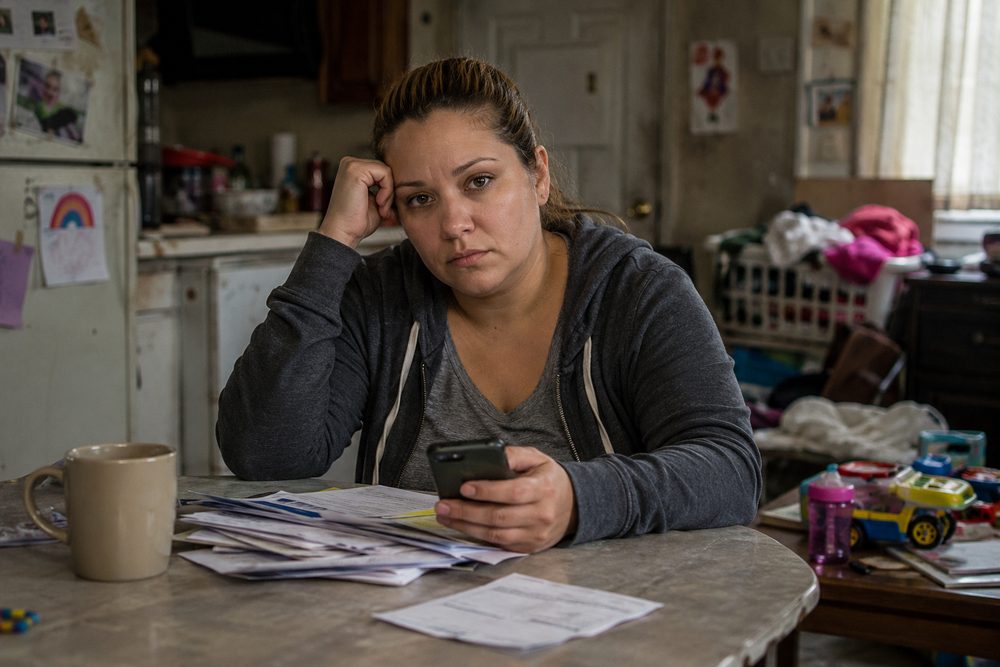
You're not the one writing Sarah's care plan, but you're on the hook for what happens next. Those unmet needs resurface as utilization you pay for and as care gaps that land in your HEDIS and Stars scores. Unlike a provider, your levers are quality measures, total cost of care, and member retention. And all three move depending on whether barriers like hers get closed or left open.
Alvee is a population-level activation layer that closes the loop. We weave the social-risk signal you already hold (from health assessments, case management, and claims) with clinical context to surface members like Sarah before they escalate. Then the Autonomous Care Navigator takes action: arranging the ride, completing the enrollment, even walking a member through Medicaid renewal before a paperwork lapse drops them from your rolls, and documenting every intervention along the way.
That documentation moves the scores you're graded on. NCQA's HEDIS measure for Social Need Screening and Intervention (SNS-E) only credits a plan when a positive screen is met with a corresponding intervention within 30 days. Screening is the easy half; closing the loop on time is where plans fall short. The same standardized data and resource-connection it automates is the backbone of NCQA Health Outcomes and Community-Focused Care Accreditation, which evaluate exactly this.
Alvee closes the loop on the social barriers driving both your cost and your quality scores: fewer avoidable admissions, more gaps closed, more eligible members kept covered, and the SNS-E and accreditation credit to show for it. It moves the three levers that decide your margin: quality, total cost of care, and member retention.